
Myoelectric Hand vs Bionic Hand: How Do Advanced Artificial Hands Work?
For people living with limb loss, modern prosthetic technology can make everyday tasks more manageable and independent. INTELL explores how advanced artificial hands work, with a closer look at the difference between a myoelectric hand and a bionic hand. Although both technologies use electronic systems to control movement, they differ in design, functionality, control methods, and available features. Understanding these differences can help users, caregivers, and families learn more about today’s prosthetic hand options.
What Is a Myoelectric Hand?
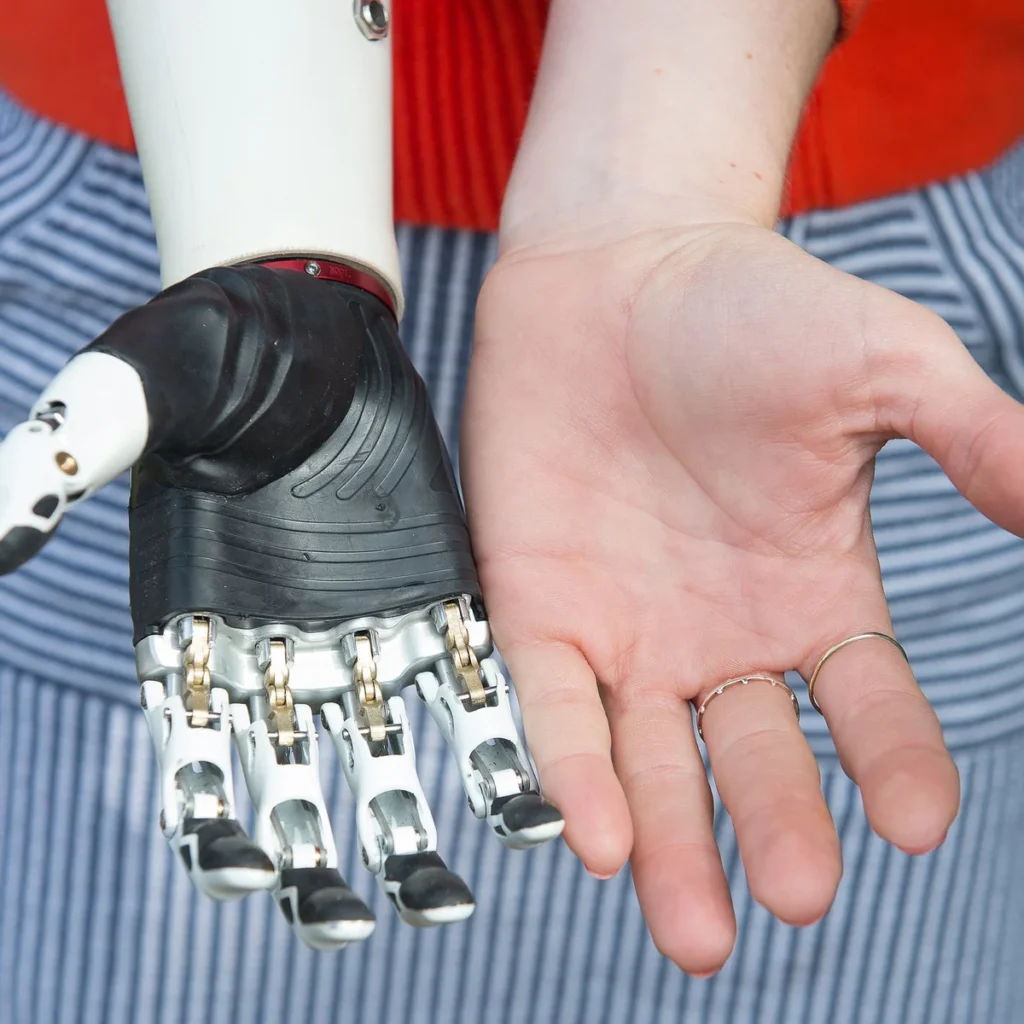
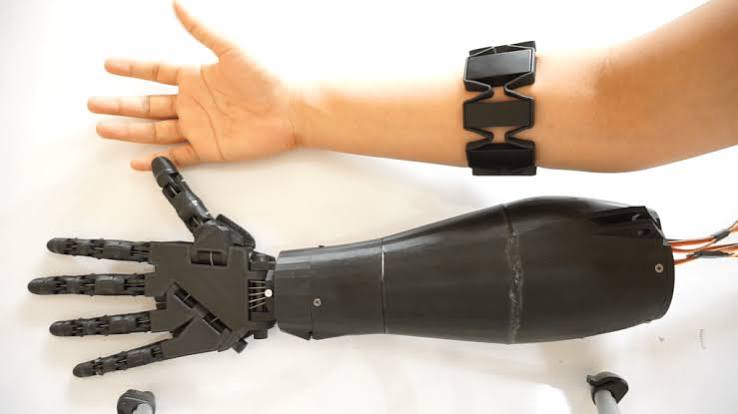
A myoelectric hand is an electrically powered prosthetic hand that uses signals from the muscles remaining in the residual limb. When a person contracts specific muscles, sensors inside the prosthesis detect the electrical activity, known as myoelectric signals.The prosthetic system processes these signals and converts them into movement.
How Does a Myoelectric Hand Work?
The basic process involves several important components:
- Electrodes or sensors: Detect electrical signals produced by muscle activity.
- Signal processor: Interprets the signals and determines the intended movement.
- Motors: Convert electrical energy into mechanical movement.
- Battery: Supplies power to the electronic and motorized components.
- Control system: Coordinates the movement of the prosthetic hand.
Myoelectric prostheses can provide more natural-looking and intuitive control than traditional body-powered prosthetic devices.
What Is a Bionic Hand?
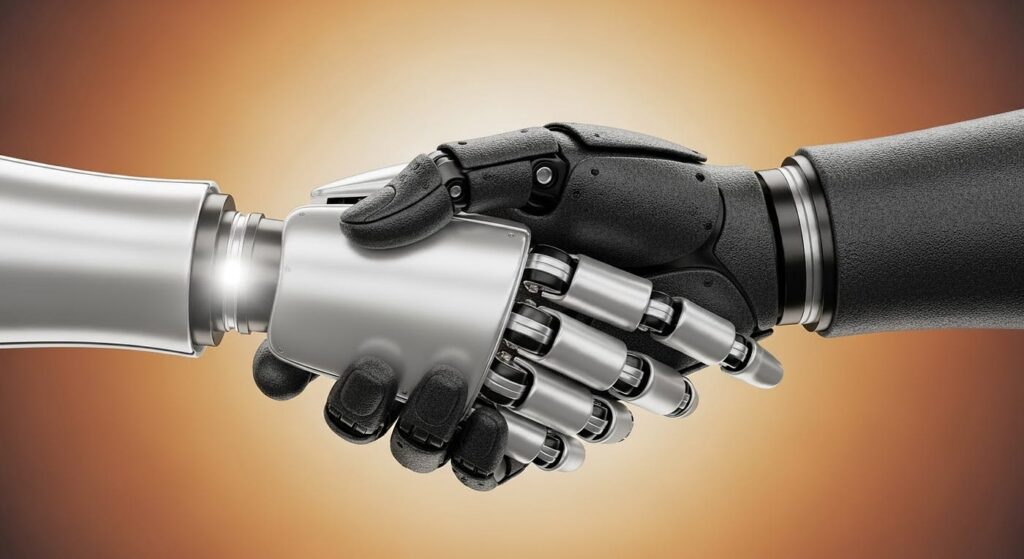
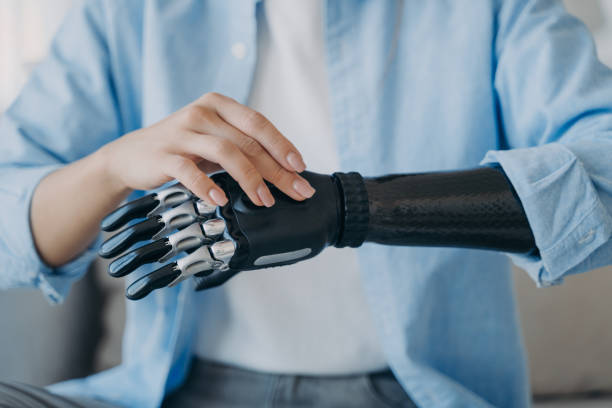
A bionic hand is an advanced type of electronic prosthetic hand designed to provide multiple motorized movements and more sophisticated control. Many bionic hands use myoelectric signals, so the terms can sometimes overlap.
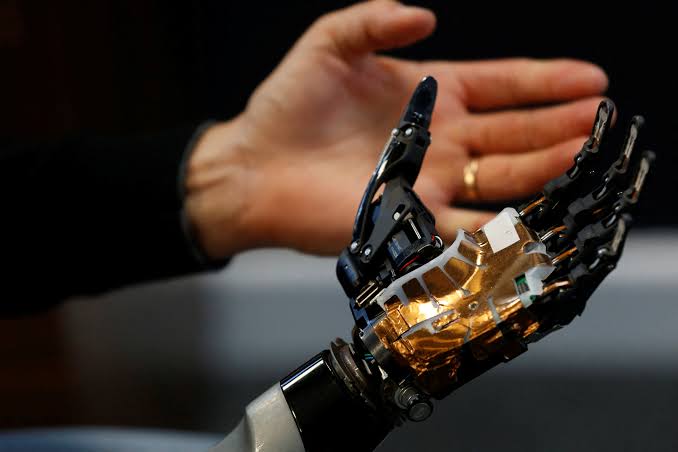
The major difference is that “bionic hand” generally describes a broader category of highly advanced prosthetic technology. Depending on the device, features may include individually controlled fingers, multiple grip patterns, wrist movement, and software-based customization.
How Does a Bionic Hand Work?
A bionic hand can combine several technologies to translate the user’s intentions into movement. Sensors detect muscle activity, while processors interpret those signals and send instructions to small motors.
Some advanced systems may also incorporate pattern-recognition algorithms, mobile applications, or other control technologies. These features can allow users to switch between different grip patterns and customize how the prosthesis responds.
Myoelectric Hand vs Bionic Hand: Key Differences
Feature | Myoelectric Hand | Bionic Hand |
Main control | Muscle signals | Often muscle signals plus advanced controls |
Movement | Motorized | Motorized, often with more functions |
Grip patterns | Varies by model | Often multiple programmable grips |
Technology level | Electronic prosthesis category | Generally refers to more advanced systems |
Customization | Model dependent | Often extensive |
Training | Usually required | Usually required |
Benefits of Advanced Artificial Hands
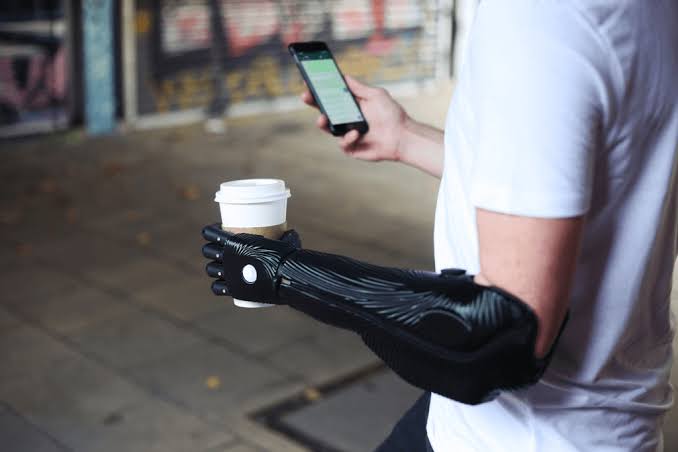
Modern prosthetic hands are designed to support practical activities while improving comfort, control, and independence.Potential benefits include:
- Multiple grip options for different tasks
- Motorized finger or hand movement
- More intuitive control than some traditional prostheses
- Customizable settings on certain devices
- Improved cosmetic appearance compared with older designs
- Potential integration with smartphones or software
- Support for everyday activities such as holding, carrying, and picking up objects
The actual performance depends on the person’s residual limb, muscle signals, fitting, training, device design, and individual needs.
Challenges and Limitations
Advanced prosthetic hands can be impressive, but they are not identical to natural hands. Users may need considerable practice to develop reliable control. Battery life, device weight, maintenance, durability, cost, and socket comfort can also affect the overall experience.
Another important consideration is sensory feedback. Some advanced prosthetic technologies are being developed to provide users with information about touch or pressure, but this area remains an evolving part of prosthetic research and development.
Conclusion
The difference between a myoelectric hand and a bionic hand mainly comes down to how the technology is categorized and how many advanced functions a particular device provides. Myoelectric hands use muscle signals to control powered movement, while bionic hands often represent more sophisticated systems that may combine myoelectric control with multiple grips, software, and other technologies.As prosthetic technology continues to develop, advanced artificial hands are becoming increasingly adaptable and user-focused. If you want to learn more about prosthetic technology and available solutions, Contact Us to discuss your requirements and explore the options that may suit your needs.
Frequently Asked Questions
Not necessarily. Many bionic hands use myoelectric control, but “bionic hand” usually refers to a broader category of advanced prosthetic devices with additional functions.
Sensors detect electrical activity from muscles in the residual limb. A processor interprets these signals and activates motors to create the intended movement.
Some advanced bionic hands can provide individually controlled or coordinated finger movements. The exact capabilities depend on the specific prosthetic model.
Yes. Training helps users learn how to generate consistent muscle signals, control different functions, and perform everyday activities safely and efficiently.
Most conventional myoelectric hands do not provide natural touch sensation. However, researchers and developers are working on technologies that can provide forms of sensory feedback.